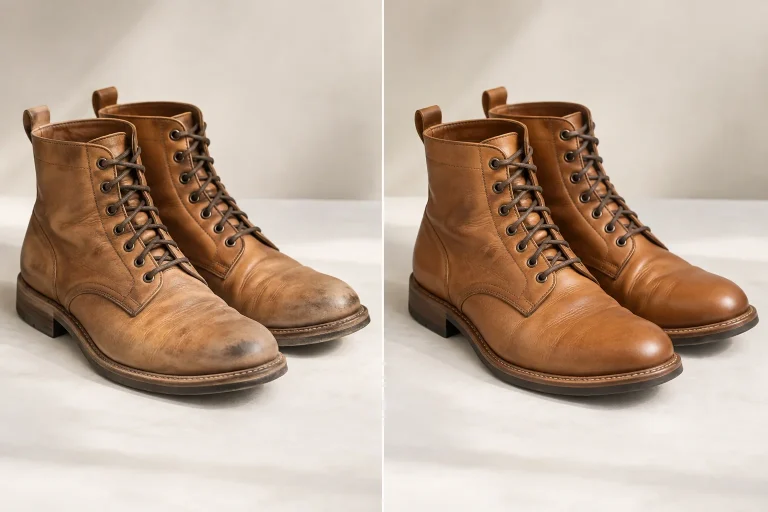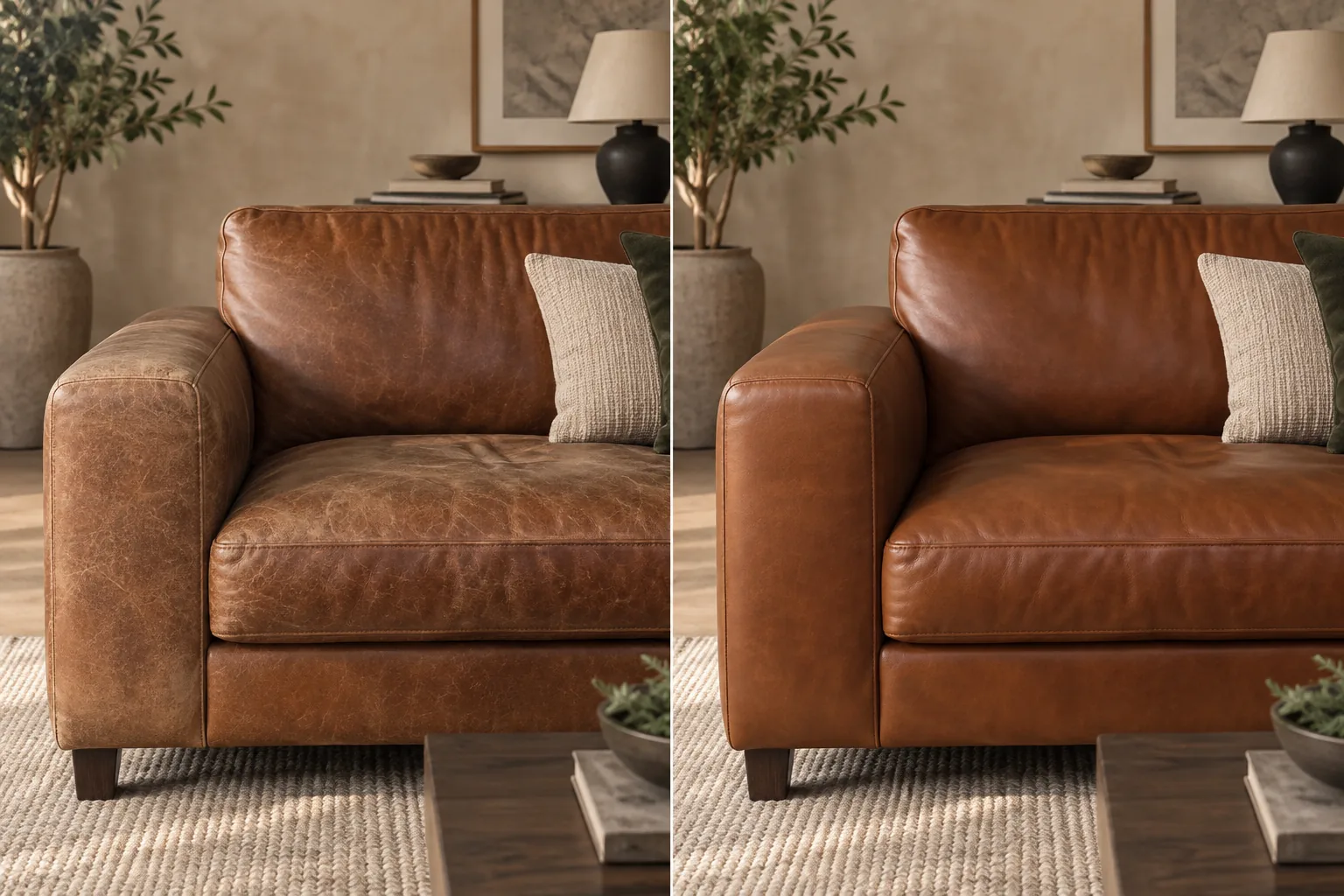
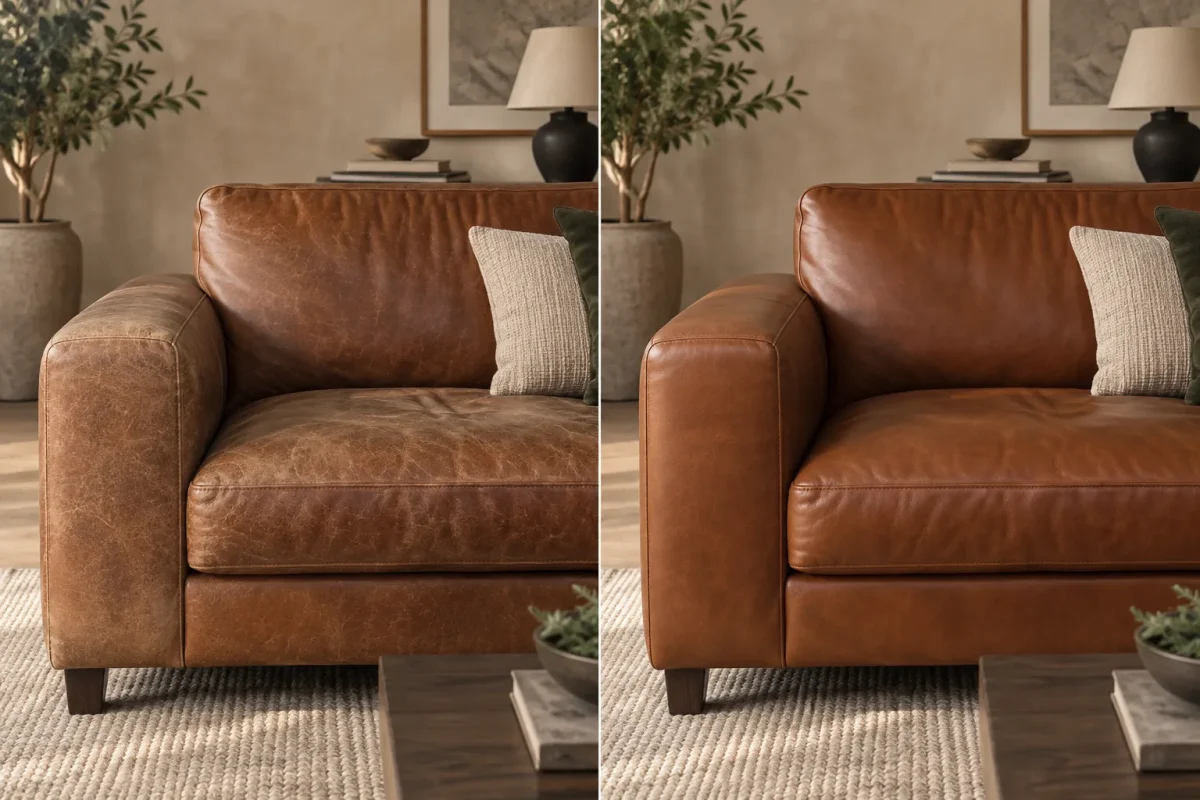
The useful first question is not “Can I make the couch look new?” but “Is the problem on the surface, or is the couch failing underneath it?” Fading and light scuffs may suit a careful restoration workflow. Peeling, torn panels and failed seams usually need a different repair or replacement decision.
When surface restoration is worth considering
A couch is a reasonable candidate for a surface-restoration test when the frame feels stable, the stitching is holding and the leather or compatible faux leather still has an intact top layer. Common signs are lighter seat panels, worn arm areas, small scuffs and a dry or uneven finish. Those conditions can be frustrating, but they do not automatically mean the whole couch has reached the end of its life.
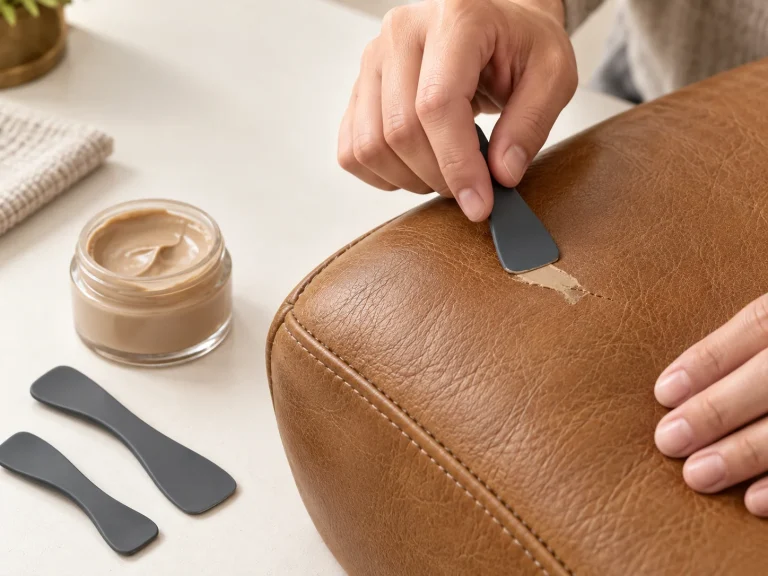
Start with one hidden-area clean and color test. If the surface responds evenly and the texture remains visible, you have useful information before committing to the rest of the couch. If the test exposes peeling or a failing bonded layer, you have also learned when to stop.
When a kit is not the right tool
Color restoration is not structural upholstery work. Large tears, holes, open seams, broken zippers, collapsed foam, a damaged frame or severe peeling need a qualified repair assessment. Adding more balm over those problems can hide the condition for a short time while making a later repair harder to judge.
Suede and nubuck also need a different care method. Check the material before ordering a product designed for compatible smooth leather, faux leather or vinyl. If you cannot identify the surface, photograph it in natural light and ask a repair professional before applying anything.
A simple decision check
Look at four areas: the seat, the front edge, the outer arm and the seams. If the issue is mostly color loss or light surface wear and the seams are sound, a controlled DIY test may make sense. If the damage follows a seam, exposes the backing or changes the shape of the cushion, treat it as a repair or replacement question rather than a color question.
Think about use as well. A lightly used accent chair gives you more time to test and care for the surface. A busy family-room sofa needs a realistic plan for cleaning, drying and keeping people off the treated area while the product instructions say to wait.

Compare the work, not only the price
Replacement, reupholstery and surface restoration each solve a different problem. A replacement changes the entire item. Reupholstery can address a failed cover or damaged structure but requires a suitable professional. Surface restoration keeps the existing material and focuses on color and care where that material is still usable.
Do not choose based on a promise that the result will be permanent or identical to factory finish. Choose the option that matches the condition you can actually see. A careful test, clear limits and a willingness to stop are better signs than a dramatic before-and-after claim with no process behind it.
Prepare before you order
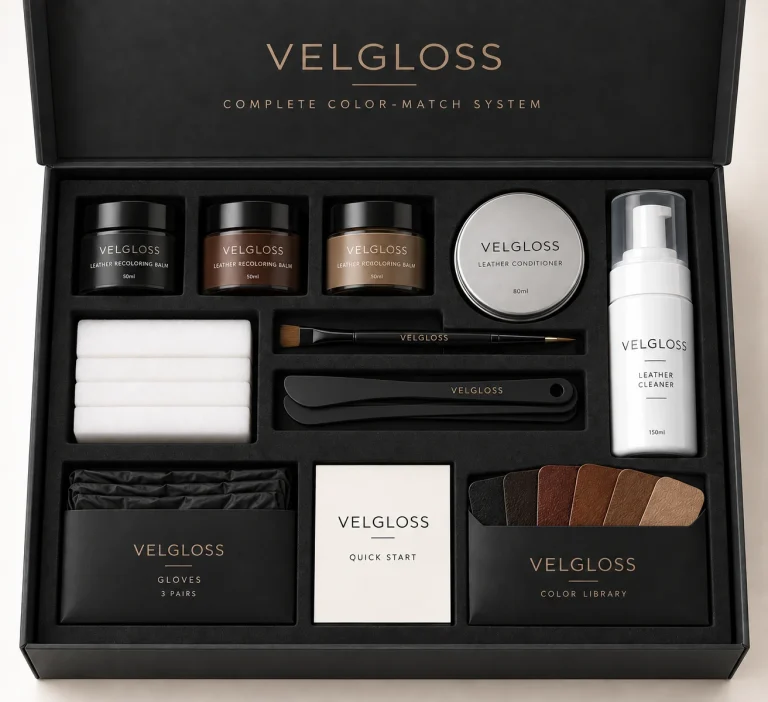
Take photos of the worn areas, note whether the surface is smooth or textured and identify the worst problem. Then read the leather couch restoration guide and the current Returns policy. If the couch is compatible and the issue is surface wear, the VELGLOSS leather couch restoration kit gives you a cleaner, conditioner, applicators and three selected recoloring balms for a controlled test.
Frequently asked questions
Should I replace a faded leather couch?
Not automatically. Check whether the structure and top layer are sound first. Fading alone can be a surface-restoration question.
What if only one cushion is damaged?
Test that cushion separately and compare it with the surrounding panels. If the damage is structural or the material is peeling, ask for a suitable repair assessment.
Next step
Use the Furniture Restoration page to choose a workflow, then make a small hidden-area test before treating a visible couch panel.