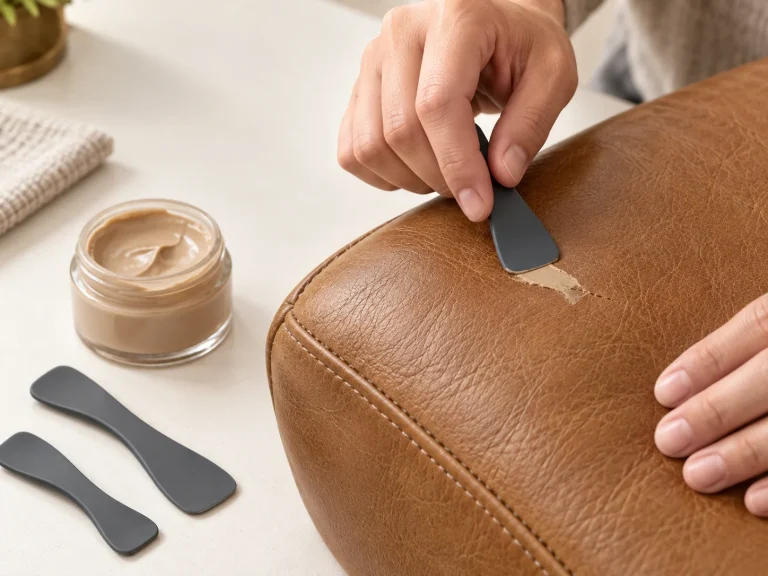
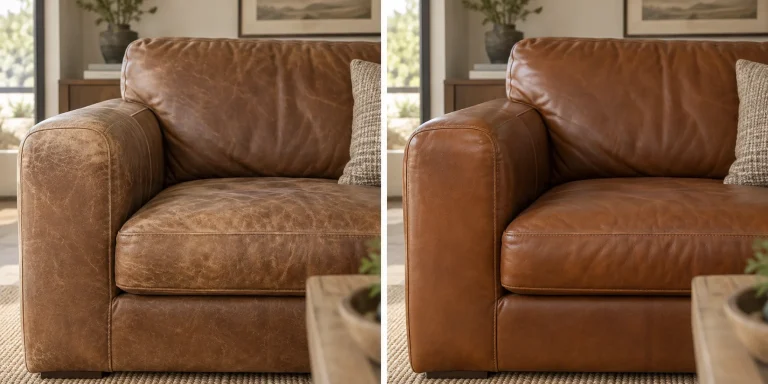
Fading changes the appearance of color; peeling means a surface layer is lifting or coming away. Suitable color wear may be a candidate for a carefully tested refresh. Adding color alone does not rebuild a failing layer, replace missing material or repair a torn seam. Inspect the material and finish before deciding that a recoloring kit is the next step.
Compare the condition, not just the photograph
| Observation | Question to check | Next step |
|---|---|---|
| Lighter color; surface remains continuous | Residue, finish change or actual color loss? | Check care instructions; assess a hidden test on a compatible surface |
| Thin flakes or lifting edges | Which material or coating is failing? | Ask the maker or a repair professional before applying color |
| Backing visible, a hole or a failed seam | Is material or structural repair needed? | Arrange a repair assessment, not a color-only touch-up |
A label is more useful than a guess
Check underneath the item, the original receipt or the manufacturer’s care information. Genuine leather can have a surface coating; bonded leather and synthetic upholstery are different constructions. A peeling photograph alone is not enough to identify which one you have.
Leather Honey describes bonded leather as leather scraps or fibers bound to a backing with polyurethane, and notes its tendency to crack and peel. That explains why the word “leather” on a listing is not enough to choose a repair method. It does not mean that every flaking chair is bonded leather.
What an intact faded area may need
Compare the worn spot with a less-used area under the same light. Do not judge a recently cleaned or damp patch against a dry cushion. Follow the item’s care instructions and let any approved hidden test dry before deciding what changed.
If the material and surface remain sound, a compatible color-restoration product may be worth testing. Read the faded-leather guide for the decision sequence. A screen swatch, a bottle called “brown,” or a dramatic before-and-after picture cannot guarantee the match on your own couch.
Why peeling changes the decision
A product needs an appropriate surface to work with. Covering a visibly lifting layer with more color does not establish that the layer underneath has become sound. Even a patch that looks more even immediately after treatment may still have the original failure below it.
Do not pick away the finish, sand an entire cushion or try a solvent recipe just to make it resemble a repair video. Those are changes to the material, not harmless color comparisons. Describe the damaged area to the maker or a qualified repairer and ask which repair, replacement or reupholstery options are appropriate.
What about scratches, cracks and small holes?
Describe the damage precisely. A light rub mark, a cut, a crack in a coating and a hole through upholstery are different requests. The scratch-and-scuff guide is relevant to surface wear, not a promise that a color product will close a hole.
Filler is not an automatic solution to widespread peeling or a failing seam. A compatible minor surface repair and rebuilding missing upholstery are different jobs. When seeking advice, include the material label, a close-up and a wider photograph of the whole panel. Ask about the cause and expected limits, not only the color.
Before spending money on a kit
- Find the material and care information, if available.
- Check whether the surface is continuous, lifting, missing or torn.
- Read the exact product’s compatibility and repair limits.
- For suitable intact color wear, plan a hidden test before a visible application.
- For a failing surface, ask for a repair assessment before purchasing a color-only product.
Frequently asked questions
Does peeling always mean the couch is fake leather?
No. Material identification needs more than that symptom; a leather finish can also be damaged. Look for the label and seek an assessment when the construction is unclear.
Will recoloring balm permanently fix peeling bonded leather?
Do not treat recoloring as a permanent repair for a failing surface. VELGLOSS does not recommend its planned color workflow for severe peeling, exposed backing, large holes or failed seams.
Sources and further reading
For material construction, see Leather Honey’s bonded-leather explanation. For one example of formula-specific absorbency limits, see Furniture Clinic’s recoloring-balm instructions. Review the repair-versus-replacement guide when the issue is more than color wear.