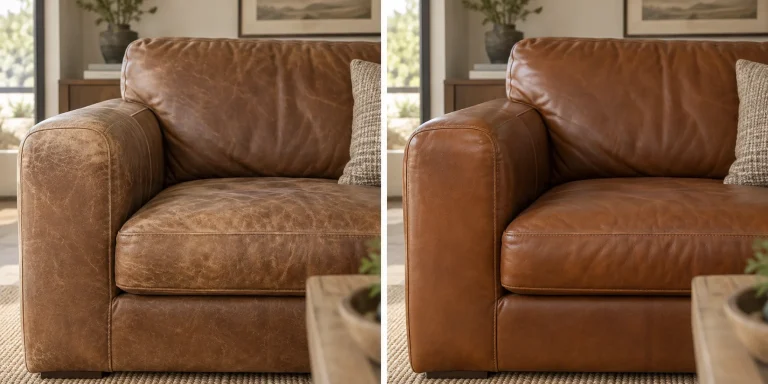
Faded leather is often a surface-wear problem, not a reason to replace the whole item. Inspect the material first, clean it gently and test a small hidden area before choosing a recoloring balm.

Reviewed by VELGLOSS Editorial on 2026-10-08. General decision guidance; use the instructions for your exact material and formula.
Is it faded color, residue, dryness or peeling?
Compare a less-used area with the worn spot under the same light. Check the care label before trying a cleaner, then allow any approved hidden test to dry. A darkened wet patch is not evidence that missing pigment has been restored.
- The mark changes after approved cleaning: reassess whether color is needed.
- The surface stays lighter but remains intact: check the finish and the chosen color product’s compatibility.
- The coating lifts or flakes: stop treating it as ordinary fading. Read what peeling changes about a repair.
A conditioner and a color-restoration product do not have the same job. The product-type comparison explains the difference without assuming one formula works on all surfaces.
Separate fading from damage
Color loss, dry touch, light scuffs and worn high-contact areas may be suitable for a careful DIY workflow. Severe peeling, large tears, large holes, failed seams, suede and nubuck need a different assessment.
Prepare before recoloring
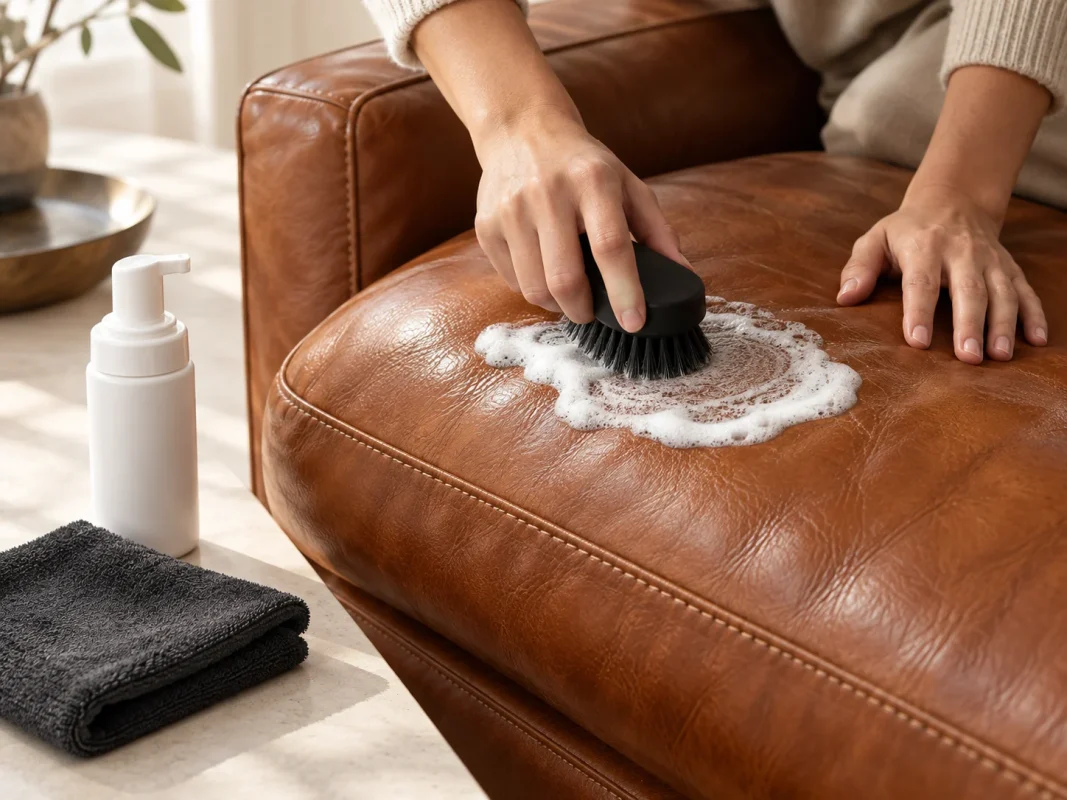
Clean the surface with the supplied cleaner and let it dry. A clean surface makes it easier to see whether the original finish is intact and where color has actually changed.
Choose and test the color
Use the Color Guide to compare Black, Dark Brown, Brown, Light Brown, Tan and White. Always test the selected color on a hidden area because lighting, age and finish change how a shade appears.
Apply gradually
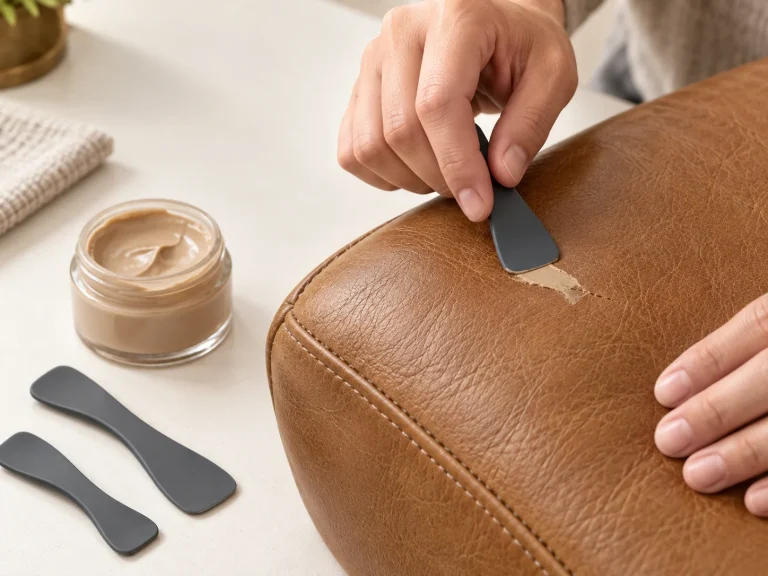
Use an applicator sponge and thin, even layers. Pause to inspect the surface between layers; a slower application gives you more control over color and coverage.
Care for the restored surface
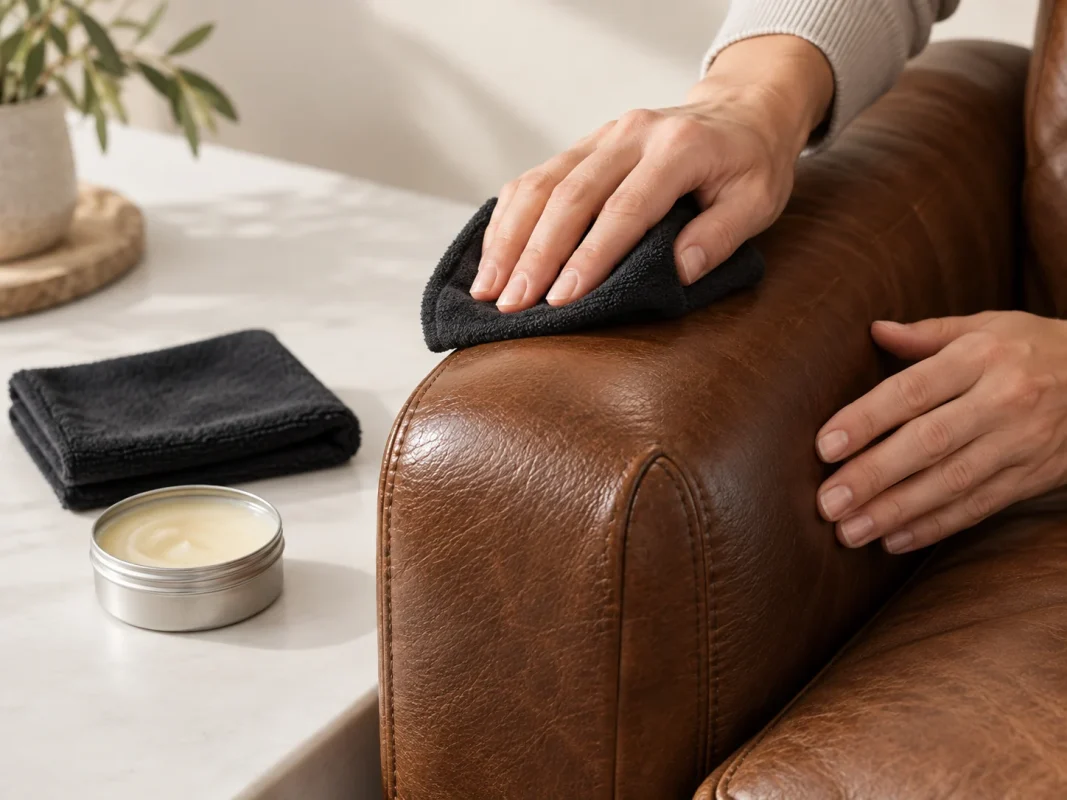
Complete the confirmed workflow with Leather Conditioner and follow the product instructions. The goal is a considered surface refresh, not a promise that every mark will disappear.
Why fading rarely looks even
Leather is exposed to hands, sunlight, clothing dye, dust and cleaning products in different amounts. That is why a single cushion can show a lighter center, darker piping and a dry-looking arm at the same time. Before you reach for color, map those differences. Wipe a small test area, let it dry and look at it again in daylight. Sometimes residue is making the surface look dull; sometimes the pigment really has worn away.
Fading is usually a gradual problem, so gradual application is easier to control. Treat one section at a time, keep your sponge strokes consistent and avoid building a hard border at a seam. If the surrounding finish is still sound, feathering the edge helps the refreshed area sit naturally beside the original surface.
Choose the simplest system that fits
For a small, known-color touch-up, the Basic system keeps the decision simple. When the surface varies or the original shade is difficult to describe, the Complete and Master systems include five foundation colors plus three or six distinct chosen 50ml shades respectively. That is a color-control option, not a promise of an automatic match. Your hidden-area test remains the decision point.
Set expectations before the first visible panel
A successful refresh should look more even, feel cared for and reduce the visual contrast of worn areas. It should not be described as structural repair when the leather is peeling, torn or separating. If you can see a failed seam, a large hole or bonded material breaking down, pause the DIY color workflow and seek an appropriate repair assessment.
Frequently asked questions
Can faded leather always be restored?
No. Surface fading may be suitable, but severe peeling, tears, holes or failed seams are outside a normal color-restoration workflow.
How many colors are in a kit?
A particular touch-up may use only one shade. Basic includes five foundation colors; Complete adds three chosen shades and Master adds six. Test first; more colors do not guarantee an exact match.