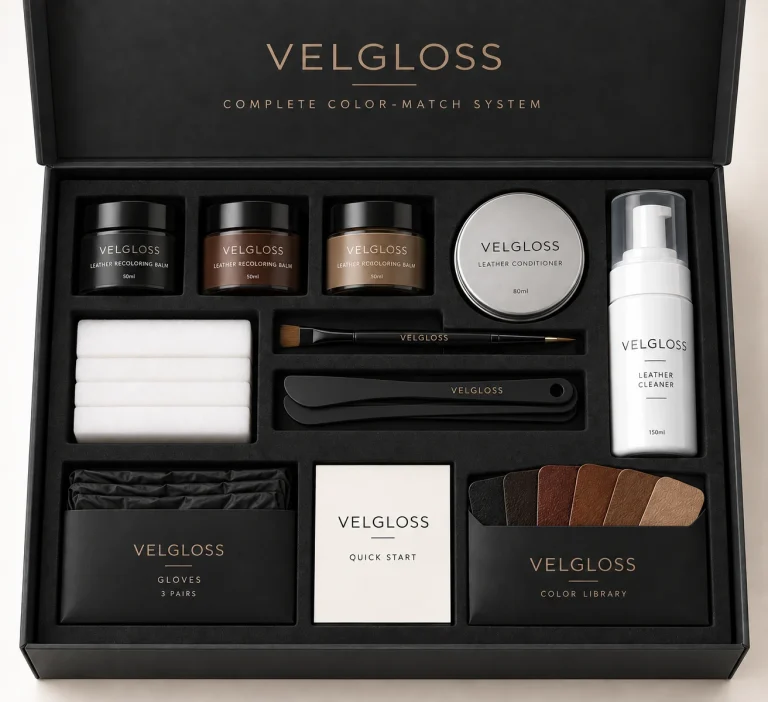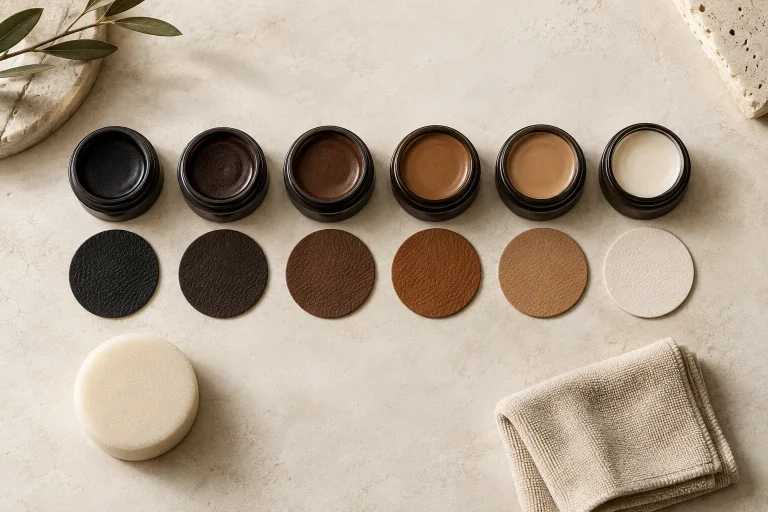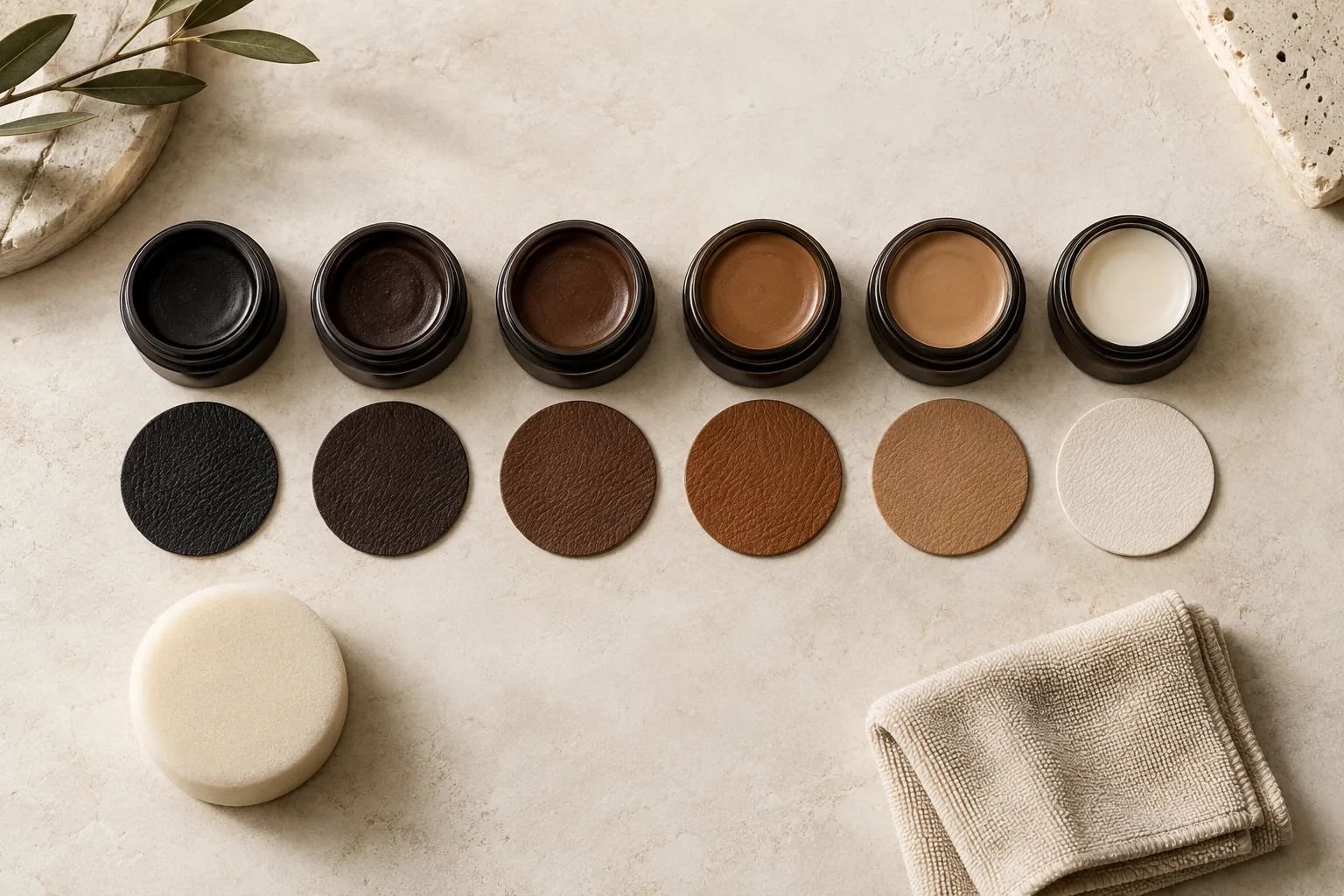
Use the problem to choose the product: conditioning, color touch-up and dyeing are different jobs. A colorless conditioner does not replace missing pigment. A recoloring balm may blend suitable color wear, while a penetrating dye needs a compatible, absorbent surface. The exact formula and existing finish matter more than whether a product comes in a jar or bottle.
A quick comparison
| Product | Main purpose | Check before using |
|---|---|---|
| Colorless conditioner | Routine care and lubrication of suitable leather | Material compatibility and possible changes in shade or sheen |
| Recoloring balm | Color touch-up on surfaces approved for that formula | Finish, adhesion or absorption requirements, and a dried color test |
| Penetrating dye | Coloring leather that can absorb the dye | Whether the existing finish blocks absorption and which finishing steps are required |
First decide what actually changed
Look at the worn area in indirect daylight. A dull seat can have surface residue, color loss, an altered finish, or more than one problem. Compare it with an area that sees less use. If the surface is lifting in flakes or showing a backing layer, stop treating it as an ordinary faded patch. Use our fading-versus-peeling guide before choosing a color product.
Find the furniture label, purchase information or maker’s care instructions if you can. “Leather couch” is not a finish specification. Do not identify a material by its color or by a product photograph alone.
What a conditioner can—and cannot—do
A conditioner is a care product, not automatically a color-restoration product. Some formulas combine care ingredients and pigment, so read the description rather than relying on the word “balm.” A product with no colorant cannot add back missing brown or black pigment.
Conditioning may change the appearance of a dry surface; that does not establish that the original color coating has been repaired. Check the maker’s compatibility instructions and allow a small hidden test to settle before judging shade and feel. Do not assume a conditioner suitable for genuine leather is suitable for vinyl, faux leather, suede or nubuck.
Why recoloring balms are not interchangeable
Manufacturers use similar names for different formulas. Furniture Clinic, for example, specifies absorbency requirements for its recoloring balm and points users toward other systems for non-absorbent surfaces. That is a useful reminder to read the instructions for the particular product, not a compatibility claim for every balm or for VELGLOSS.
For an existing color touch-up, start with a close shade and test it away from view. Judge the dried result, not a wet sponge or a screen swatch. Our color-selection guide explains how to compare nearby shades without assuming that every brown surface is the same.
When dyeing is a different project
A penetrating dye must get into the leather. Fiebing’s explains that an existing finish can block its dye and that its redyeing process includes preparation and a finishing step. Do not interpret that as permission to strip a sofa with a household solvent. Follow the exact system’s instructions or ask a qualified repairer to assess it.
If you want a large color change rather than a small refresh, say that explicitly when seeking advice. Restoring a faded brown armrest toward its surrounding shade is not the same request as turning a dark couch white.
Questions worth asking before you buy
- Does this formula name my material and finish as suitable?
- Is the job routine care, restoring similar color, changing color, or rebuilding a damaged surface?
- What preparation, curing and finishing steps are required?
- How will I evaluate a hidden test before working on a visible panel?
Frequently asked questions
Can I use conditioner instead of recoloring a faded couch?
Not if the job is replacing missing pigment with a colorless product. First check whether the apparent fading is residue, dryness or actual color loss.
Is dye always stronger or better than balm?
No. “Better” depends on the material, finish and job. A product that cannot work with the existing surface is the wrong choice, regardless of how strong its color looks.
Sources and further reading
These manufacturer examples explain product-specific requirements, not performance testing of VELGLOSS: Furniture Clinic’s recoloring-balm guidance, Fiebing’s penetrating-dye instructions, and Leather Honey’s conditioner compatibility guidance.