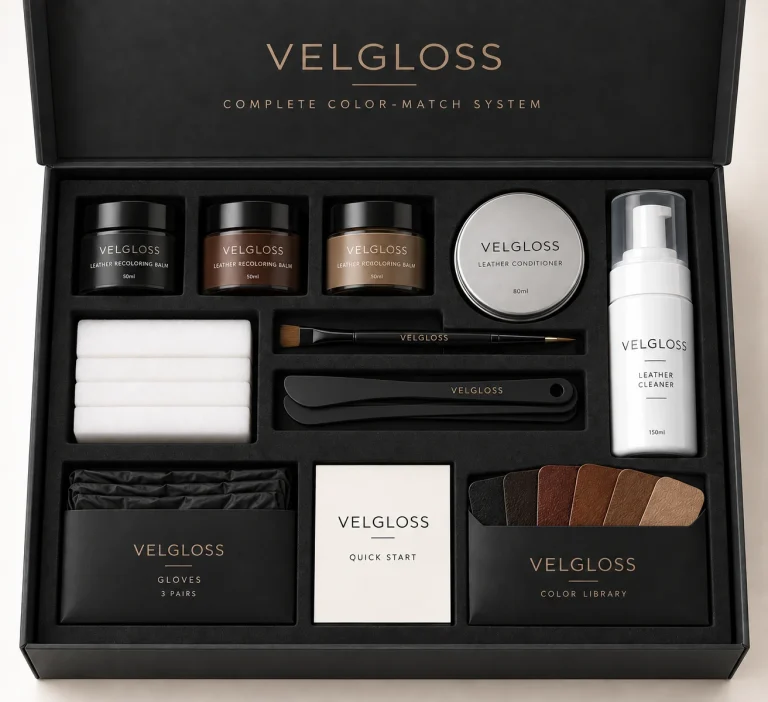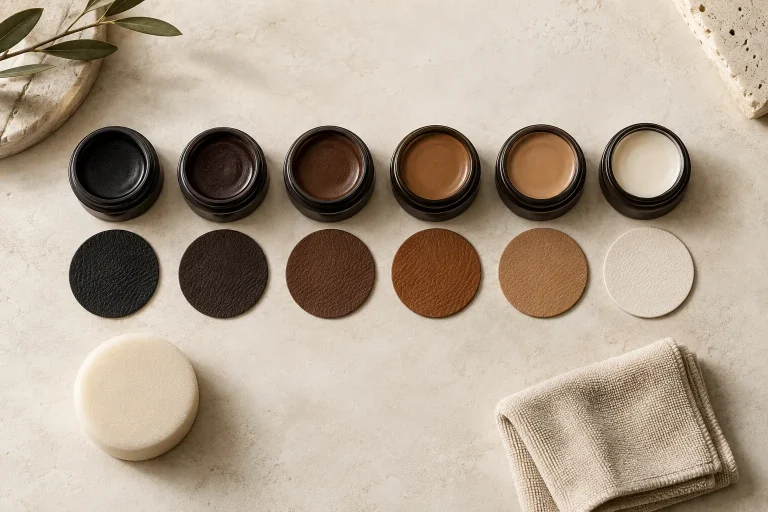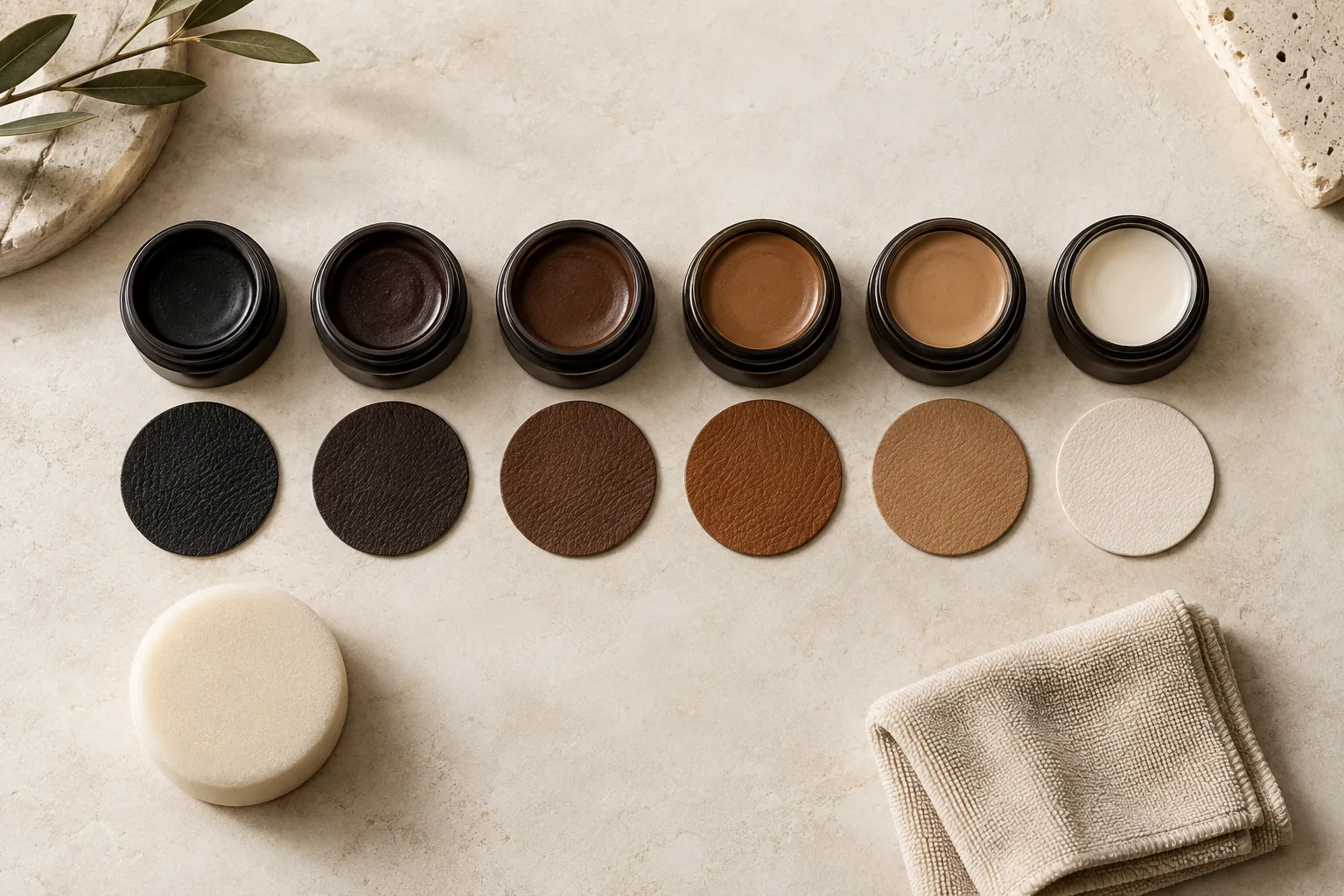
Choose the closest starting shade, then test it on a small hidden area before restoring a visible surface. VELGLOSS offers Black, Dark Brown, Brown, Light Brown, Tan and White as starting points for compatible smooth leather, faux leather and vinyl.
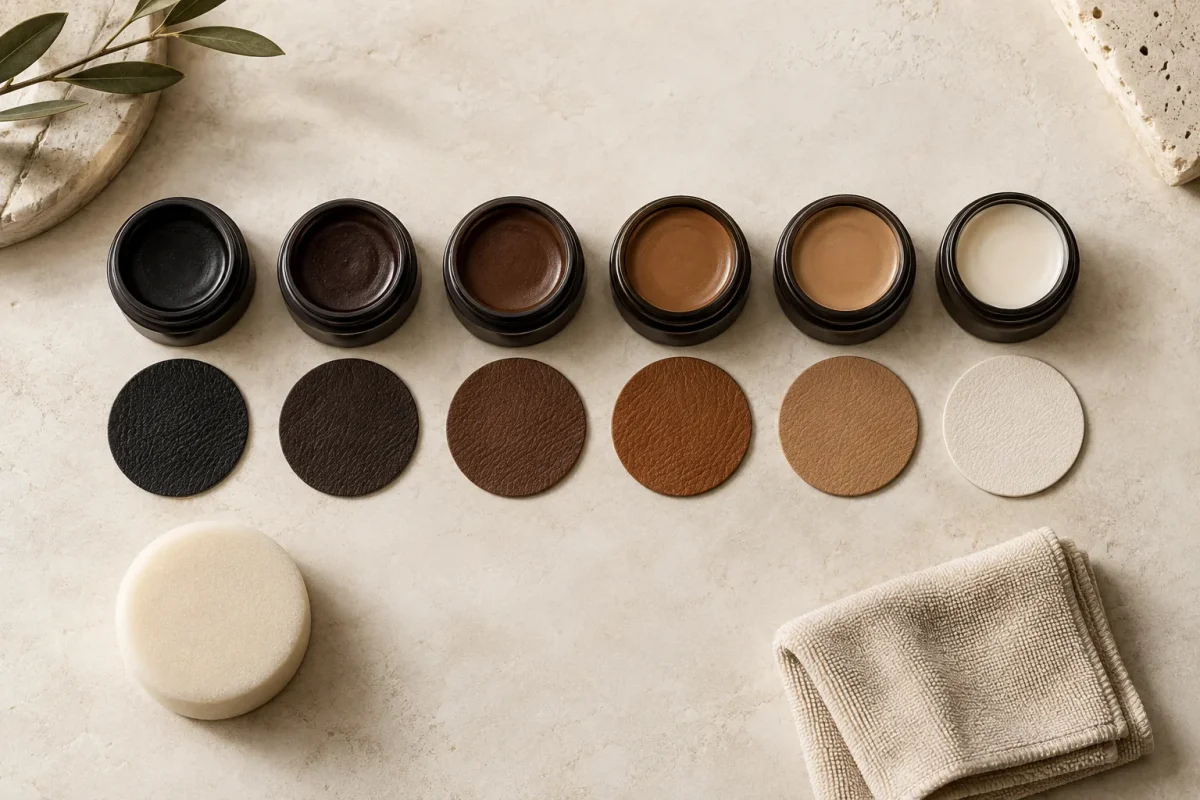
Why screen color is not enough
Leather age, finish, lighting and existing wear change how a color appears. Treat the swatches on screen as a starting reference, not a guaranteed material match.
Use the surface and its use as clues
Black is common on automotive interiors and formal footwear. Dark Brown and Brown suit deeper furniture and boots. Light Brown and Tan often suit warm furniture and accessories. White is best considered on very light surfaces. The original material still determines the final choice.
Choose one or three colors
Basic is designed for a focused single-color touch-up. Complete and Master let you select three different 50ml recoloring balms: a closest match, a darker shade and a lighter shade for more control on varied wear.
Test in a hidden area
Apply a small sample in an inconspicuous place and wait according to the supplied instructions. Check the color in the same lighting where the item will be used.

Compare the family before the exact shade
Begin by deciding whether the surface reads black, brown, tan, light brown or white overall. Then look at its undertone: warm, cool, muted or slightly red. This two-step decision is more reliable than searching for a perfect screen match. Leather age, finish, nearby colors and the light in the room all influence what you see.
Use the three-color option with a purpose
Basic is designed for a focused one-color touch-up when the target is already clear. Complete and Master let you choose three different 50ml recoloring balms. A practical palette is one closest match, one slightly darker shade and one slightly lighter shade. Test each separately first; only then decide whether a blend or a controlled transition is needed.
Test where the eye will not start
Choose an inconspicuous edge, underside or interior panel. Clean it, let it dry, apply a small sample and inspect it in the lighting where the item is normally used. The sample should be judged after it has settled according to the supplied instructions, not while it is still wet or freshly rubbed.
Keep your decision useful later
Record the color names, the surface tested and the order of application. That note turns a future maintenance session into a repeatable process. If the item has different panels, do not assume one sample represents every area; age and finish can vary across the same piece.
Before you begin
Look at the item where it normally lives: beside the couch, inside the car or near the wardrobe. The surrounding colors and the available light affect what “matching” means. Compare the six starting colors, then select a hidden test area on the same panel you plan to restore.
For a three-color palette, write the role of each bottle before mixing or layering: closest match, darker support shade and lighter support shade. Test each one on its own first. That makes later decisions understandable and gives you a useful record if you need to revisit the project.
A practical stopping point
Pause after each stage and inspect the surface before adding another layer. If the color is even, the texture remains visible and the transition is comfortable at normal viewing distance, the work may be ready for the next care step. If the surface looks heavy, patchy or structurally compromised, stop and reassess instead of trying to hide the problem with more product. Careful restoration is a sequence of small decisions, not a race to cover every mark.
Frequently asked questions
Can I return an opened color bottle?
Check the current Returns policy before ordering; color suitability is why a hidden-area test matters.
Can VELGLOSS match a photo automatically?
No automatic photo matcher is offered in this release. Use the guide, test first and contact VELGLOSS if you need help deciding.
Next step
Open the VELGLOSS Color Guide, then choose the restoration system that fits your project.